WHAT’S BEEN GOING ON
THE WILD WORLD OF TIKTOK
I first logged onto TikTok for the bookstore where I work. We were trying to broaden our social media presence and it was the latest and fastest growing platform. We already had store accounts on Twitter, Facebook, and two different Instagram accounts. But TikTok was supposedly for the New Generation. Ironically, they chose me, one of the oldest booksellers that they had to create our TikTok account.
I’m a quick study. I researched everything I could about the platform. I watched way too many Youtube videos. But, in the end, nothing quite prepares you for the experience. I didn’t truly begin to get a handle on things until I started my own account, promoting my writing.
The first lesson I learned?
Nobody knows what the hell is truly going on.
Oh, you have tons of videos claiming to know the current algorithm or just the right sounds to use. There was advice on whether or not to use hashtags. Some people said to break up your video into several small bites. Others said to write several paragraphs on the screen so people will watch the whole video. After all, being seen is the most important thing.
Nonsense.
Like any social media platform, the most important thing is to make it work for you. Get out of it what you need. And for my writing, that’s exactly what I do. I don’t care about how many followers that I have or whether one of my three minute videos goes viral.
I’m there to connect with other writers and readers.
That’s what I ask of TikTok and that’s what I get. I stay out of the drama. I don’t post politics. I sure as hell don’t trash anyone.. However, I do offer my advice as a writer and bookseller. I do listen to people that just need someone to listen. I do offer encouragement when I can. And I’m happy with what I get out of TikTok.
As the old saying goes, garbage in, garbage out. Use social media to let in what you want and keep out what you don’t. As with anything, all things in moderation. By the way, my TikTok account is @jensenjames06 . If you’re into writing, stop by and check it out. As with this website, I’d appreciate it if you leave a comment and just say hello. It’s nice to know sometimes that my tappings into the internet are actually reaching people and not being intercepted by ENCOM (look up TRON).
Have a great week humans.
TOO SENSITIVE OR NOT TOO SENSITIVE?-THAT IS THE QUESTION
So, I wrote a book.
It’s been said, “write what you know”. That advice can be tricky. If you write about a serial killer, maybe you shouldn’t follow that advice. What if you’re writing about an ancient Egyptian Pharaoh? Is it wrong to try to get inside their head and create a character with which you have no cultural or physical connection?
I’m working up to a point.
A few years back, I wrote a detective short story. I wanted my main character to be unique. He had to avoid being the stereotypical private eye. Even more, I wanted him to be someone that could be underestimated. It would be that characteristic that he could use to his advantage. I had just finished watching Game of Thrones and was impressed by the Peter Dinklage’s portrayal of Tyrion. Here was a character that defied expectations and went on to become a leader (spoiler alert).
I knew a had an image for my detective, Fix Larson.
From the outset, I knew that I had to be careful and make his character as true to life as possible. Fix could not be a stereotype of a person with dwarfism. So, I put in many hours of research. I studied the forms of dwarfism, their symptoms, their challenges, everything I could find. I read blogs and watched posts from people in the Little Person community. Then, I sought out people with dwarfism and asked them to beta read my novel to make sure I got things correct. And I’m glad that I did. For the most part, my portrayal was spot on. However, one awesome reader pointed out some nuances that I got wrong.
I got the novel completed and edited. Then, I sent it to my agent.
That’s where I hit my first wall.
More in my next post.
Please feel free to comment. Also, check out my writer advice posts on TikTok at @jensenjames06

Where have I Been?
Being a writer who has a day job to pay the bills causes some things to fall to the side. Although I’ve neglected this website, I’ve not neglected my writing. In fact, it’s been moving better than in a while.
About 40k into a historical novel that I was writing, an old character that I’d created for a short story kept nagging at the edges of my brain. I kept pushing him back, trying to stay focused on the novel in progress. But he refused to be put in the corner. So, I did the I’ll advised move of jumping to a new project.
Why not? There was a lot of potential energy there.
Last month, I finished that new book. Now, it sits with my agent, awaiting it’s turn for her reading. Meanwhile, I’ve started on book two of the new series. The enthusiasm for this character hasn’t dimmed one bit. Instead, it’s grown stronger.
So, what am I doing back on the website? Well, I’m early to a Bollywood party. Luckily, there’s a Starbucks to duck into for about an hour. Since I didn’t have a book and my book two is just in the outlining phase, it seemed like a good time to get this page back on track.
Oh, by the way, I’ve started posting on TikTok. If you’re on that crazy app, stop by and see me. I’m at @jensenjames06 .
Thanks for reading. Take second and say hello.
A BLANK PAGE
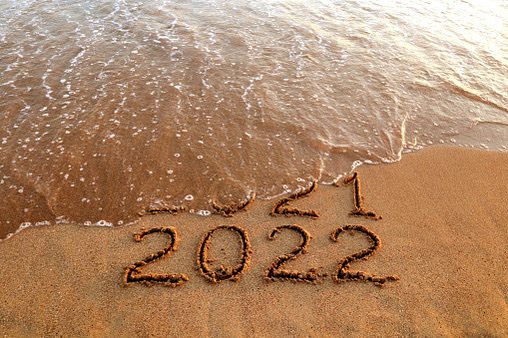
The blank page. Does it scare you? Or, does it excite you? Maybe a little of both?
For a writer, it means a new start. Whether it’s the start of sentence, paragraph, chapter, even a story or book.
For many us, it can mean a fresh beginning. Maybe it’s as simple as a new outlook. or as detailed as plan for a life change.
Either way, it’s a symbol for potential.
When I’m writing a story, each blank page has a potential to go in a million directions. Knock on wood, I’ve never had a blank page get in my way. When it comes to my fiction, the page fills up pretty fast. I’m just watching the mind movie and hope that I can capture it on my screen.
When I was a reporter, it was a bit different. There’s always a balance of narrative, style, information, and convention. Things had to follow a more strict format and often the word count and word limit were at odds. Opinion columns flowed well, while feature and news stories took a bit longer.
As for blank pages in life, I’ve had too many to count. In my Jr year of high school, my family moved from San Diego, California to rural Pensacola, Florida. I hated leaving my life-long friends behind. However, it was pretty exciting to start over where nobody knew me. I could create a brand new me.
A few years later, having no clear direction, I followed the example of my Dad and other relatives and joined the Navy. That was definitely a blank page and scary as hell. Although I didn’t make a career out of it, I had some great experiences and traveled the world.
There were even more blank pages to fill. After 10 years out of high school, I met the girl who sat behind me in Home Room and we got married. The next 26 years of marriage filled a whole lot of blank pages. It’s been a story that’s had as many ups and downs as a Lifetime movie. However, through it all, she and I have enjoyed a Mickey and Minnie love that’s never dimmed. In 2008, we both turned over a new blank page and moved to my childhood home of San Diego.
What’s next?
Well, tomorrow I’ll get back to work on my latest novel. I’m nearing the end and all looks like it will wrap up just the way I hoped. My wife and I work at the same bookstore. So, we’ll jump on the bus in the morning and continue working with words.
I’ll look forward to each new page. Hopefully, my life’s story will have several more chapters. I’ve got a great coauthor. I’m not ready for the denouement. However, I’ll take it one page at a time and enjoy the story.
Thanks for reading.
CHRISTMAS GHOST STORIES

Have you ever listened closely to the song, IT’S THE MOST WONDERFUL TIME OF THE YEAR? Specifically, the verse about, “There’ll be scary ghost stories” is the part I’m talking about. As a kid, I never questioned that line. However, as an adult, I had to ask, what the heck? Isn’t that for Halloween?
Oh no, my children.
I won’t take you all the way back to the pagan roots of ghost stories in the dead of winter. Let’s just realize that the long, dark nights led people to believe it was a time when the veil between the world of the living and the dead was at its most thin. Add to this the fact that everyone had to huddle together to stay warm and relieve the boredom of long nights, no wonder some of the more creative members of the gathering started spinning tales to quicken the pulse of those around the meager fire.
Jump ahead to the Victorian Age. It was thanks to Queen Victoria, or rather her husband, Albert, that Christmas enjoyed a revival. Being German, Albert loved the Christmas season and popularized the tradition of bringing in a tree into the house and decorating it. The newsworthy couple threw elaborate Christmas parties and got England, and the rest of the world, interested in the Yule Season again.
Wasn't it always popular? Nope. The industrial revolution was such a success that companies soon thought giving a day off from work just so the common folk could get to make merry and still get paid seemed like a bad business idea. As such, Christmas faded into the foggy recesses of memory.
And along came Charles Dickens.
Along with Victoria’s trendy holiday revival, Dickens put forth a herculean task of creating a Christmas story in just six weeks. To make it even more challenging, since his publishers were not too happy with the lackluster sales of his previous book, Martin Chuzzlewit, Dickens paid from his own money for the publication. The first print run of 6,000 copies ran out by Christmas Eve. Overnight, Christmas was a hit again as well as the wonderful tradition of the Christmas Ghost story.
To set you on your own Christmas Ghost Story path, I have listed some great reads to start with below. Let me know if you have a favorite to add.
A CHRISTMAS CAROL BY CHARLES DICKENS
OH WHISTLE AND I’LL COME TO YOU MY LAD BY M.R. JAMES
THE TURN OF THE SCREW BY HENRY JAMES
SMEE BY A.M. BURRAGE
BETWEEN THE LIGHTS BY E.F.BENSON
THE SEARCHER AT THE END OF THE HOUSE BY WILLIAM HOPE HODGSON
THE KIT BAG BY ALGERNON BLACKWOOD
CHRISTMAS PRESENT BY RAMSEY CAMPBELL
THE CHRISTMAS SPIRIT BY GRADY HENDRIX
Thanks for reading. If you need me, I’ll be by my fire with a glass of port and a trusty, dusty old book. Happy Holidays.
WHAT ABOUT BOOK REVIEWS?

Books live and die by them. Authors both love and hate them. Yes, we’re talking about the book review. A review is simply when a writer or reader decides to praise or pan a book based on their subjective opinion of what they read. And that’s what it is, an opinion. And as my dad always colorfully stated it, “Opinons are like ass*****, everybody has one”.
Being a bookseller as well as a writer, I write reviews. I have a Twitter account just for reviews (@mini_bookreview). Although, I’m woefully behind on posting reviews there. Writing has been taking a front seat this year. Still, I do use that Twitter account to re-tweet other authors, publishers, and bookstores. Occasionally, I’ll have a short review posted in the bookseller review space in the San Diego Union Tribune newspaper.
Unlike some book reviewers, I don’t post bad reviews. As I mentioned at the start, a review is an opinion. Granted, it may be a learned opinion, but an opinion none the less. As such, I refuse to trash a writer’s work just because it didn’t fit my needs or expectations. There are too many good books to say good things about. So, I stay on the positive side. When I post a review, I tag the author as well as their publisher.
Now, remember, I’m a writer as well. So, I long to get a good review on what i’ve written. Don’t believe any author that says a bad review doesn’t affect them. Unless you’re an AI program, you care about what readers think about what you’ve written. Since I’ve only published two short stories in anthologies, my exposure to reviews is limited. Thankfully, I have not received a bad review. However, I’m sure when my novel finally gets published, there will be folks who don’t like it. They might not like it enough that they’ll even take time to write a bad review. It’s part of the game.
What I can’t abide are two types of reviews:
THE HATCHET JOB REVIEW: This is the type of review where a person goes after an author simply because they don’t like them or what they’re writing about. Often, you can tell they haven’t even read the whole book. They’re just pissed at the world and want to take it out on a writer. You’ll often find them lurking in the shadows of Amazon or it’s subsidiary, Goodreads. They’ll toss out a 1 star review and state they wish that they could give it a negative 4 stars. Take these reviews with a grain of salt.
THE MAMA REVIEW: This is the type of review that you would expect one’s mother to write. It has nothing to say except that the writing is the best thing out there and everyone should buy one for themselves and all of their friends and relatives. I dislike this kind of review because I can’t trust it. If the reviewer has the same last name as the author, beware. I get it. Everyone wants to help out their friend or family member get good reviews. But, if you’re not being honest, the reader that takes your advice and finds it was a whitewash, they’re going to be pissed at you and the writer. So much for more sales.
Listen, their are two important things that you can do for an author. First, buy their book. That’s right. Don’t ask them for a comp copy unless you’re a professional reviewer. Most writers are doing it for money. Yeah, we love the writing. However, we all want to get paid. The easiest and least expensive thing that you can do for a writer is to read their book and post a well-reasoned and honest review. It will make the writer believe that they’ve not wasted their time and it might get them some extra sales. And like I mentioned above, tag their publisher in the review as well. If their self-published, hashtag the genre in which they write.
So, please take the time to give writers some feedback. It means a lot. However, like your mama said, “If you can’t say something good about someone, keep your mouth shut.
Thanks for reading.
MAKING TIME FOR WRITING

Unless you’re among the extreme minority of writers who make a comfortable living off of those words you create, time is never on your side. Long gone are the days of wealthy patrons who adopt a poor writer and set them up in a spare room on their estate. Or is that just a fantasy we writers like to dream that there used to be?
My bills are paid by my day job as a bookseller. Actually, I live in San Diego. So, it takes my bookselling job and my wife’s bookstore job, and her library job to pay the bills. Even when I was a full-time reporter, I didn’t make a living at it. I’ve always had to juggle my writing time around the paying bills time.
If you have the same problem, I’ve listed below the ways I fit time for writing into my daily work life. Hopefully, some of the ideas will work for you as well. Also, if you have any suggestions, please leave a comment.
PUBLIC TRANSPORTATION IS A WRITER’S FRIEND: Taking the bus to work gives me 30-40 minutes of uninterrupted writing time on the way to and from work. Either I carry my laptop or use my cell phone to type away on my current WIP or work on notes.
CARRY YOUR WORK WHEREVER YOU GO: I use the Scrivener writing program. It allows me to go back and forth between my laptop and phone with ease. Anything I write is updated on my other devices. Whenever I’m stuck someplace with nothing to do but wait, I can whip out my phone and knock out a couple of paragraphs.
TURN OFF DISTRACTIONS: TV and social media are time suckers. Limit your social media time. If you’re on social media, try to make it benefit your writing by sticking to writing groups and posts. Watching TV is fine. But limit it to set times.
GET YOUR FAMILY INVOLVED: I don’t mean have them help you write. Although, my wife is a great beta reader for me. What I mean is to have your family understand and support your writing goals. Let them know that you’ve set aside time to write and ask them to help you stick to it. I tell my wife that she’s free to nag me when I neglect my writing.
STAY ORGANIZED: Writing is work. Plan your writing time. Keep your projects organized so you can drop in and out without getting lost. I have a separate email account just for my writing. I use it to email myself story notes, research, and other things directly related to my writing. In that email account, I’ve created folders for each project as well as markets, research and more. That way, I never have to go searching very far for my information.
KEEP OTHER PROJECTS GOING: I say there’s no such thing as writer’s block if you have more than one project going. If you’ve hit a spot in your novel where the path has grown dark, jump onto another project and dedicate some time there while you give the other project time to rest. It could be something as simple as a short story or even an outline. Not writing is a creativity killer.
All of the above have helped me out. However, I admit that I sometimes get sidetracked and have to correct my course. One thing that’s helped is that I’ve tried to make writing a daily habit. After a couple of weeks of setting aside a certain time to write, you will become uncomfortable if you don’t do it. It will become something you have a desire to do. Try it.
I hope that some of the above ideas help you. Writing isn’t easy. Like anything worthwhile, you have to make it a priority. Give it some dedication, and your writing will reward you. Now, quit reading this and go write.
Thanks for reading,
J.A. Jensen
SO YOU WANT TO BE AN AUTHOR
In addition to being an author, I work in a bookstore. One of my many titles is of Local Author Coordinator. It’s a fancy title for a minor role. In short, I set up Sunday signings for local authors. We set up a table for them and they sell their books on a one-day consignment basis. After that, we do a 60/40 split on the gross sales. Authors get a chance to reach new readers and say they’ve sold their book in a Indie Bookstore that’s been in business for 125 years.
After doing this for awhile, I’ve noticed that many of the authors fall into a couple of categories.
THE VANITY AUTHOR- This author spends lots of money at one of the many vanity presses or maybe bypasses any sort of press and simply hires a company to print their self-edited manuscript. These authors rarely research the markets or bookstores. They wanted to write a book and expect every bookstore to stock it. I have mixed feelings about such authors. It irritates me that they think money can solve anything. However, I feel bad for many senior citizens who fall prey to unscrupulous vanity presses who take their money and give them no follow up help at all.
THE INDIE AUTHOR- When I speak of the Indie Author, I mean the professional kind. They have researched their subject and written a compelling book. They paid money to have their book professionally edited and hired a good cover artist. Most of the time, they’ve researched the market. They hit up their local bookstores, rent tables at fairs and markets, attend conferences, and spend a lot of time on social media, plugging their book and making contacts. Often, their reason for being an Indie author is to have complete creative control.
THE SMALL PRESS AUTHOR- These authors are a part of a growing industry of small presses. Some of the most interesting writing comes out of these areas. They often cover genres that the Big Publishers are too timid to tackle. Some times, these authors make a better living than more traditionally published writers. Since they get small to no advances, they start making money faster off of their work. Some great award winning authors first started out at these small presses and end up winning some prestigious awards.
I empathize with all authors. However, I have a few little pleas to those of you who contact bookstores.
MAKE SURE YOUR BOOK IS FINISHED AND FULLY EDITED
MAKE SURE YOUR BOOK LOOKS PROFESSIONAL
REALIZE BOOKSTORES ARE BUSY. DO YOUR RESEARCH ABOUT THEM BEFORE YOU APPROACH. GIVE THEM TIME. BUGGING THEM ONLY WORKS AGAINST YOU.
REALIZE BOOKSTORES SURVIVE ON A RAZOR-THIN MARGIN. BE REASONABLE WITH YOUR EXPECTATIONS. ALSO, REALIZE THAT THEY CAN ONLY SELECT BOOKS THAT THEY KNOW THEIR CUSTOMERS WILL BUY. SHELF SPACE COSTS MONEY.
DON’T MENTION YOUR BOOK IS AVAILABLE AT AMAZON. BEZOS HAS USED BOOK SALES AS A LOSS LEADER FOR A LONG TIME TO LURE CUSTOMERS INTO THEIR SUBSCRIPTION SERVICES. MANY SMALL BOOKSTORES WENT OUT OF BUSINESS BECAUSE OF THEM.
SHOP AT YOUR LOCAL BOOKSTORE. IF YOU WANT THEM TO SUPPORT YOU AS AN AUTHOR, SUPPORT THEM AND THE AUTHORS THEY BRING INTO THE STORE.
In the end, anyone can be a writer. However, not everyone is an author. For that, you must finish what you start. Write the book. Polish the book. Make the book the best it can be. Don’t try to skip the steps. It’s a job as well as a journey. Once you’ve done all of that, pat yourself on the back. Then, put just as much work into getting that book in front of readers.
Oh, and good luck.
Please Try Again & Get a Discount

So, I received some emails that my site’s payment system wasn’t working during my Halloween Sale. I’ve fixed the link and now things are back on track. To celebrate, I’m offering 20% off for the entire month of November. Just use the code READ20 .
If you like Sherlock Holmes and scary stories, this is the anthology for you!
Thanks for supporting an Indie Writer!
NaNoWriMo or Not?

With the smell of Pumpkin Spice in the air, Autumn means National Novel Writing Month has arrived. For those not in the know, it’s when writers gather across the internet and try to write a 50k word novel during the month of November.
Will I participate? Nope. And let me tell you why. But first, let me state that I wish the best for writers that are participating. I’m not saying anything bad about NaNaWriMo. It’s been a great tool for many writers to place their butts in the chair and finally write the novel they’ve always talked about starting.
I tried it four years ago. There was a novel that I’d been trying to get off the ground for a while. My thought was that the rigid goals for the 50k would give me the structure that I needed to get moving and have the majority of a novel to send to my agent.
The first couple of days were fine. I was energized and felt a kinship with all of the other writers that were sharing a common goal. And then, I made the mistake of reading the social media posts. Along with the useful tips on how to make the most out of your time, as well as discussions about plotting, style, and dialogue, there grew a troubling undercurrent……..WORD COUNT.
I’ve been writing for many years and have varied success at setting word count goals. Working a full-time job dictated the direction and success or failure of most of my word count goals. However, for NaNoWriMo, there was no excuse for not keeping up with the rigid word count goals. There were daily, hourly, and seemingly instant posts about writers knocking out thousands of words in their latest session. Granted, some of those writers may not be working a full-time job, or sleeping 8 hours, or participating in daily life. Also, some might also just be padding their figures to look good. And, I’m sure there were actually writers that were being blessed by the muses and tapping away, feeling the bliss of a writing high.
I don’t write that way.
I found myself more concerned with comparing my word count to all of the other writers. It got to the point that the daily goal became more important than the actual novel. Instead of listening to my characters, I was watching the word count indicator on my Scrivener writing program. At the end of the month, I did not reach 50k. Additionally, the story that created was fractured and in need of a complete start over. In short, it felt like a 30-day failure.
Some writers would advise me that maybe NaNoWriMo allowed me to get the novel out of me and I could use that to either go back and improve it or realize the story did not hold up and that the challenge allowed me to exorcise the bad ink. That’s possible.
However, here’s what participating in NaNoWriMo did for me. It opened my eyes to what works for me.
I need a daily writing goal.
That daily goal is not a word count goal. It’s a work on the story goal.
My style is part “pantser” and part “plotter”. I need sign posts and a destination. However, I’m open to letting my characters take off at an exit to see the World’s Largest Frying Pan and see where it leads the story.
The only writer I need to compare myself to is the writer I was yesterday.
As long as I keep moving forward, there is no timer ticking away on when I need to finish the story. If I’m enjoying the ride, it will hopefully be passed along to the eventual reader.
So, NaNaWriMO did help me. However, like many great lessons in my life, I accepted its teaching and moved on. It gave me clarity for my writing style. And for that, I don’t regret trying it.
If you’re participating this year, I wish you much success with your writing. Just please keep it enjoyable.